The Journal · 14 September 2026
Eight countries, one continent: why “Asian food” doesn’t mean anything
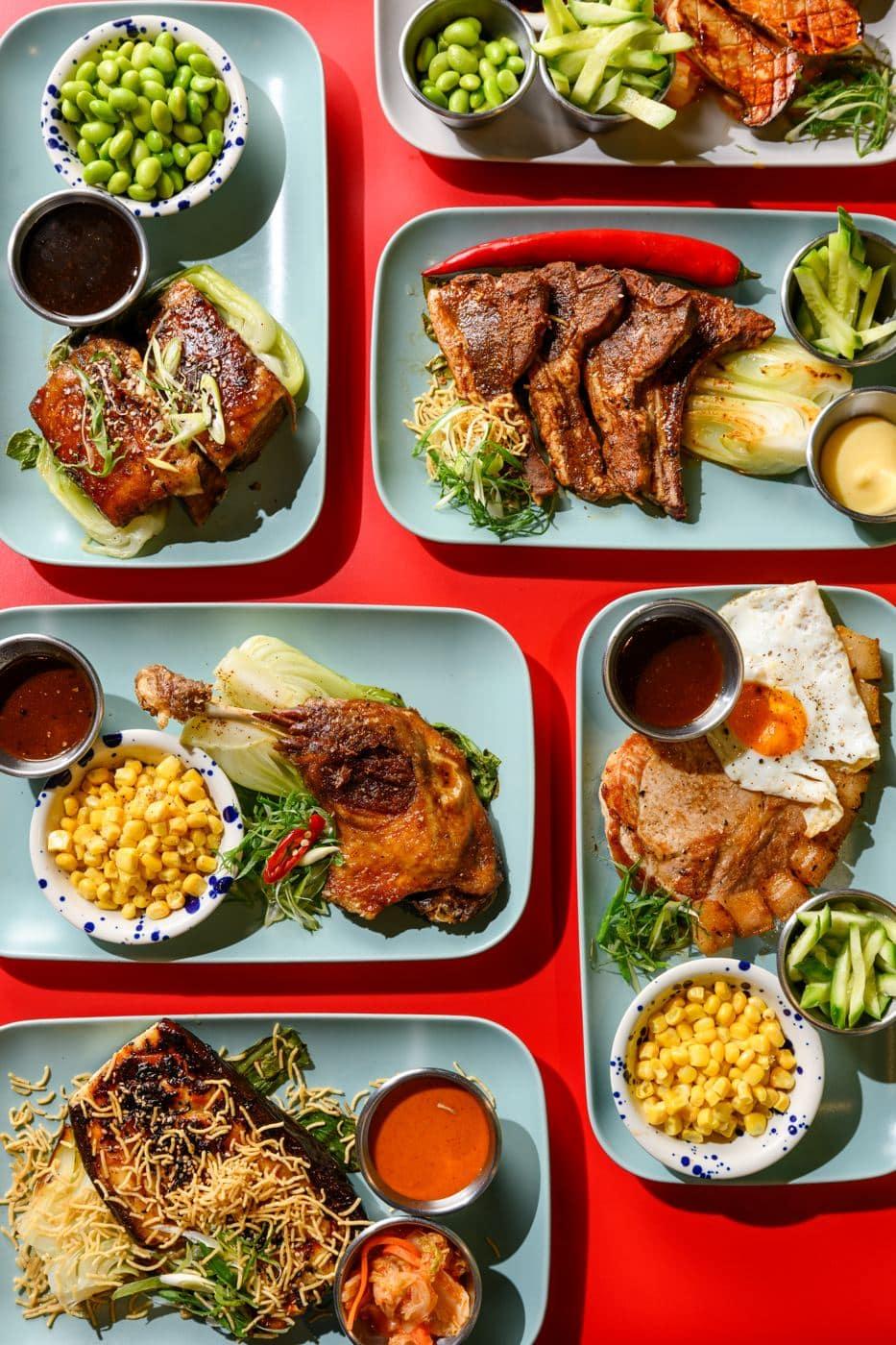
Ask someone in Malta if they fancy Asian food tonight and nobody asks the obvious follow-up: which Asia?
It's a continent of forty-eight countries. A Vietnamese kitchen and a Korean one share almost nothing. Different pantry, different heat, different idea of what a meal is even for. Lumping them together is like offering someone European food and handing them either a plate of Sicilian pasta or a Swedish smorgasbord, and expecting them not to notice.
We cook eight of these cuisines. Here's what actually separates them.
Thailand: the balancing act
Thai cooking is the tightrope walk. Every dish chases four flavours at once, sour, sweet, salty and hot, and the cook's job is to keep all four in the air.
Tom yum is the proof. Lemongrass, galangal and lime leaf give it perfume, fish sauce gives it depth, lime gives it the sour edge, chillies bring the heat. Take any one away and the whole thing collapses. A massaman curry does the same trick more slowly: it came up the trade routes with cardamom, cinnamon and cumin, so it tastes closer to a Persian stew than to a green curry made two streets away.
Malaysia: the crossroads
Malaysia is what happens when Malay, Chinese and Indian kitchens spend three hundred years in the same port. Nothing stayed pure and everything got better.
Rendang is the dish to understand. Beef and coconut milk go in the pot together and cook for hours, past the point where it's a curry, until the liquid is gone and the coconut has caramelised into the meat. It's a curry that turned itself into something else while nobody was watching. Nasi lemak, the national breakfast, is rice cooked in coconut with sambal, peanuts, anchovies and egg, salty and sweet and crunchy on one plate.
Korea: fermentation and fire
Korean food is built on two things that sound like opposites. Ferment, then burn.
Kimchi isn't a side dish so much as a foundation. The sourness it brings underpins the whole table, and gochujang, the fermented chilli paste, brings a heat that's deep rather than sharp. Then there's the grill: bulgogi marinated in soy, pear and sesame, hitting metal in front of you.
The other difference is structure. A Korean meal arrives all at once, the banchan covering the table, and you build every mouthful yourself. There are no courses. There's just the table.
Indonesia: the spice paste
Every serious Indonesian dish starts with bumbu, a paste of shallots, garlic, chilli, candlenut and whatever else the region demands, ground and fried until it stops smelling raw. Everything else is built on that base.
Sambal is the other constant, and there are hundreds. Some are fresh and lime-sharp, some are cooked down and smoky. The plate is usually simple, rice with one or two things, and the sambal is where the personality lives.
Singapore: the hawker instinct
Singapore's food is Malay, Chinese, Indian and Peranakan, sharpened by a national obsession with doing one dish perfectly.
Hainanese chicken rice looks like nothing on the plate. Poached chicken, rice, chilli sauce. Which is exactly why it's hard: the rice is cooked in the chicken stock and the fat, the chicken is plunged into ice to set the skin, and there's nowhere to hide. Laksa goes the other way, coconut and prawn broth thick enough to coat a spoon.
Sri Lanka: not Indian
Sri Lanka gets filed under Indian food, and the island would like a word.
The spices are roasted darker, so the curries are nearly black and taste toasted rather than bright. Coconut is everywhere, from the milk in the curry to the sambol scattered on top. And there's the equipment: hoppers are cooked in little bowl-shaped pans into a crisp lacy edge with a soft centre, often with an egg dropped in.
Kottu roti has no Indian equivalent at all. Flatbread chopped on a hot griddle with vegetables, egg and curry, the blades clattering in rhythm. You hear it before you taste it.
The Philippines: sour and unbothered
Filipino food is the one that surprises people, because it doesn't follow the rules of its neighbours. Barely any chilli. Vinegar instead.
Adobo is meat braised in vinegar, soy, garlic and bay until it's sharp and savoury at once. Sinigang is a sour soup built on tamarind. That sourness runs through everything, and Spanish and Chinese influence sits on top of it, so you get lumpia next to something that would look at home in Andalusia. Then dessert arrives as halo-halo, shaved ice with about nine things in it, and gives up on restraint entirely.
Vietnam: restraint
Ours, and the most disciplined of the eight.
Vietnamese cooking is about clarity. Pho is a broth simmered twelve hours with charred onion and ginger, then served almost naked, the herbs added at the table by the person eating it. Nothing is heavy. Herbs go in raw and by the fistful, so mint and coriander and Thai basil act as ingredients rather than garnish. Nuoc cham, the fish sauce dressing, sharpens everything it touches.
The French left bread and coffee behind, which is how banh mi and ca phe sua da exist, and they folded in so completely that nobody thinks of them as borrowed. It's the country we finish on, too: Vietnam is the last of the eight passport nights, on 21 January.
So, which Asia?
The honest answer is that you can't decide from a menu description. Rendang and adobo are both braised meat. One is sweet, dark and coconut-heavy, the other is sharp with vinegar. Reading about them tells you almost nothing. Eating them a fortnight apart tells you everything.
Which is roughly why we built the next four months the way we did. From 1 October, every other Thursday, our kitchen in Gżira cooks one of these eight countries as a three-course set menu. One night, one country, done properly, then two weeks to think about it before the next one. The dates are on our What's On page, and you can book a table for any of them.
You can collect the whole continent if you like. There's a passport for it.
Saigon, 305 Triq d'Argens, Gżira. Also at 177 Naxxar Road, Birkirkara, and the MIA food court in Luqa.